
How French Children Spend Summer Vacation
When people imagine summer in France, they often picture lavender fields, outdoor cafés, and long afternoons by the sea.
But what does summer actually look like for French children?
As someone who grew up in the south of France and now raises my own daughter between French and American cultures, I often find myself comparing childhood summers in both countries. While every family is different, there are a few traditions and rhythms that many French children share.
If you've ever wondered what summer vacation is like in France, here's a glimpse into how many children spend their summer months.
Summer Vacation Is Long
French schools typically finish in early July and don't start again until early September.
That's about eight weeks of summer break.
Because the vacation is longer, many families slow down and embrace a more relaxed pace of life.
Many Families Leave the City
If you've ever visited Paris in August, you may have noticed something unusual.
The city feels quieter.
Many French families leave urban areas during the summer to spend time with relatives, visit the countryside, or head to the coast.
Some families return to the same vacation spot every year. Others visit grandparents or spend time in a family home that has been passed down through generations.
For me, summer meant returning to my family's home near Toulon in the south of France, where days were filled with sunshine, visitors from around the world, and endless outdoor adventures.
Children Spend a Lot of Time Outside
French summers are often centered around simple outdoor pleasures.
Children might:
Ride their bikes
Play soccer with friends
Visit the beach
Explore nearby villages
Have picnics in the park
Chase lizards and insects in the garden
The days feel less scheduled and more spontaneous than during the school year.
Markets Are Part of Everyday Life
In many parts of France, outdoor markets are a summer tradition.
Families stroll through colorful stands filled with:
Fresh fruit
Vegetables
Cheese
Bread
Flowers
Handmade goods
Children often help choose ingredients for meals or pick out a special treat.
Visiting the market isn't just shopping—it's a social activity and an important part of local culture.
Long Family Meals
Food plays an important role in French summer life.
Lunches and dinners are often enjoyed outdoors with family and friends.
Children may spend hours around the table listening to conversations, sharing stories, and enjoying seasonal foods.
Summer favorites include:
Fresh peaches
Melons
Tomatoes
Ice cream
Baguettes
Grilled foods
Meals are often as much about spending time together as they are about eating.
Summer Camps Exist, But They're Different
French children do attend summer camps, called colonies de vacances, but many families also rely on local community programs, sports clubs, or grandparents during the school break.
Children Learn Through Everyday Experiences
One thing I appreciate about French summers is that learning often happens naturally.
A child might:
Learn about geography while traveling
Practice math at the market
Discover history while visiting an old village
Learn responsibility by helping prepare meals
The focus is often on exploration and real-life experiences rather than structured lessons.
A Slower Pace
Perhaps the biggest difference is the overall rhythm.
French summers tend to feel slower.
There is time to wander, explore, read, daydream, and simply be a child.
Some of my strongest childhood memories aren't from special events. They're from ordinary summer moments: the sound of cicadas, the smell of sunscreen and stopping at the bakery for a warm baguette.
Bringing a Little Piece of France Home
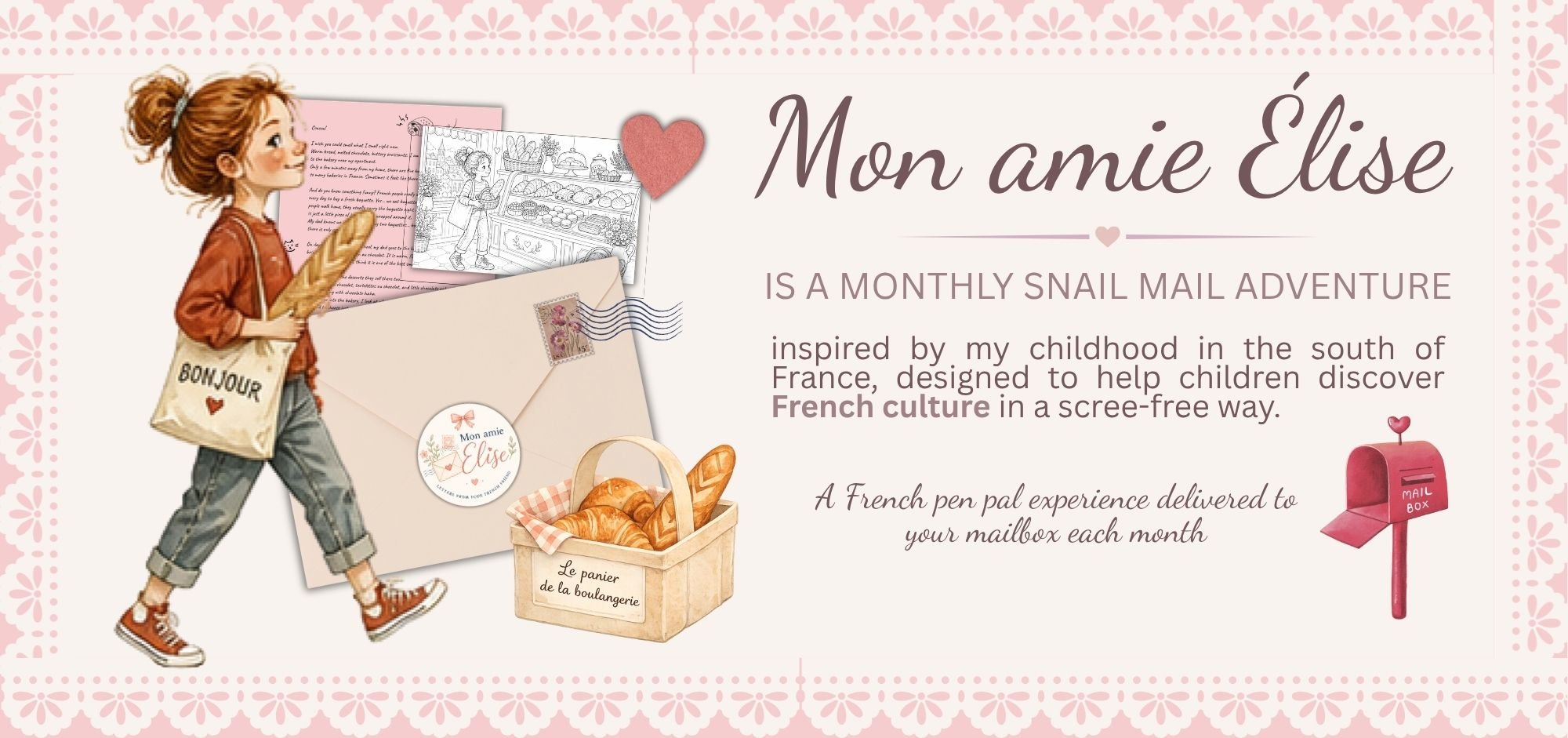
One of the reasons I created Mon amie Élise is because I wanted children around the world to experience some of the magic of everyday life in France.
Each month, subscribers receive a letter inspired by French culture, traditions, and childhood experiences, along with activities, stories, and simple French language learning.
It's a small way to help children discover that while life may look different around the world, we often share many of the same joys.
Final Thoughts
French children don't necessarily spend summer doing extraordinary things.
Instead, many spend their days enjoying simple pleasures: family, friends, outdoor adventures, good food, and plenty of time to explore.
And perhaps that's one of the reasons French summers leave such lasting memories.