
French is often called one of the most beautiful languages in the world. But for many families, introducing French to children can feel intimidating, especially if parents do not speak the language themselves.
The good news?
Children do not need formal lessons or grammar workbooks to begin connecting with a language.
In France, language lives inside everyday moments: stopping at the bakery, listening to music during dinner, writing postcards during summer vacations, or hearing familiar expressions repeated throughout the day.
The best way to introduce French to kids is not by making it feel like school. It’s by making it feel playful, cozy, and naturally part of family life.
As a French mom raising my daughter in the United States, I’ve realized that children learn languages best when they associate them with warmth, curiosity, and meaningful memories.
Here are some simple ways to bring French culture and language into your home naturally.
1. Introduce French Through Everyday Play and Routines
You do not need to suddenly speak French all day at home to expose your child to the language.
In fact, small and consistent exposure often works best.
One easy way to begin is by introducing a few French words naturally into daily life:
bonjour (hello)
merci (thank you)
bonne nuit (good night)
bisous (kisses)
eau (water)
pain (bread)
croissant
Children love repetition, especially when words are connected to routines and emotions.
You can also make French feel playful through simple activities:
labeling objects around the house in French
playing French memory matching games
using flashcards during snack time
hiding French word cards around the house for scavenger hunts
practicing colors or food words while grocery shopping
Even something as simple as saying:
“Can you find the chaise?”
or
“Time for your pyjama!”
helps children begin connecting sounds and meaning naturally.
The goal is not fluency overnight.
The goal is familiarity.
2. Create a Weekly “French Afternoon” at Home
One of the easiest and most memorable ways to introduce French culture to kids is by creating a small weekly ritual around it.
Children remember experiences far more than vocabulary drills.
A weekly “French afternoon” can become something your child genuinely looks forward to.
You do not need anything elaborate. Some simple ideas include:
sharing pastries or baguette
listening to French music in the background
coloring French-themed pages
learning a few simple French phrases together
looking at maps of France
reading stories inspired by French traditions
pretending to order food at a French café
creating a mini French picnic
You could even choose a different French theme each week:
Paris cafés
French bakeries
the South of France
French markets
the Eiffel Tower
French beaches
French holidays and celebrations
Children learn best when language feels connected to joy, imagination, and sensory experiences.
A cozy afternoon with pastries, music, and stories can often leave a stronger impression than an hour of formal lessons.
3. Use French Audio in the Background of Everyday Life
Children absorb language incredibly well through listening.
Even passive exposure helps familiarize them with pronunciation, rhythm, and common expressions.
French songs for kids are a wonderful place to start, especially during:
breakfast
car rides
art time
bath time
bedtime routines
Another wonderful option for younger children is using French Tonies or French audio stories.
Many families love adding French-language Tonies to their child’s Toniebox because it allows children to hear authentic French in a relaxed and playful way.
Audio exposure can help children become comfortable hearing French naturally without pressure to “perform” or respond perfectly.
And often, curiosity comes first. Speaking comes later.
4. Explore French Food and Baking Together
Food is one of the easiest ways to make culture feel real and exciting for children.
French culture is deeply connected to meals, bakeries, markets, and shared family moments around the table.
Simple French-inspired activities can include:
making crêpes together
tasting pastries from a local French bakery
baking madeleines
creating a pretend French café at home
learning the names of French desserts
setting up a toy bakery for imaginative play
In France, children grow up around these small rituals. They help make culture feel alive and comforting.
And honestly, kids usually love anything involving pastries.
5. Focus on Connection, Not Perfection
One of the biggest mistakes parents make is thinking they need to teach French “correctly” from the beginning.
But children do not need perfect grammar lessons to begin loving a language.
What matters most is:
exposure
consistency
curiosity
positive memories
emotional connection
A child who associates French with music, stories, pastries, family traditions, and cozy moments is much more likely to stay interested long-term.
Language learning does not have to feel academic in early childhood.
Sometimes it begins with something as small as hearing bonjour every morning.
Why Receiving Mail Can Make Language Learning Feel Magical
One thing I’ve noticed as both a parent and educator is how exciting physical mail still feels for children.
Most kids today rarely receive anything addressed to them personally. Mail has become mostly bills, advertisements, and packages ordered online.
But for children, seeing their own name on an envelope can feel genuinely magical.
There is anticipation in it.
Connection.
Curiosity.
And unlike fast digital content, letters invite children to slow down.
They can reread them, touch them, collect them, display them in their room, and return to them again and again.
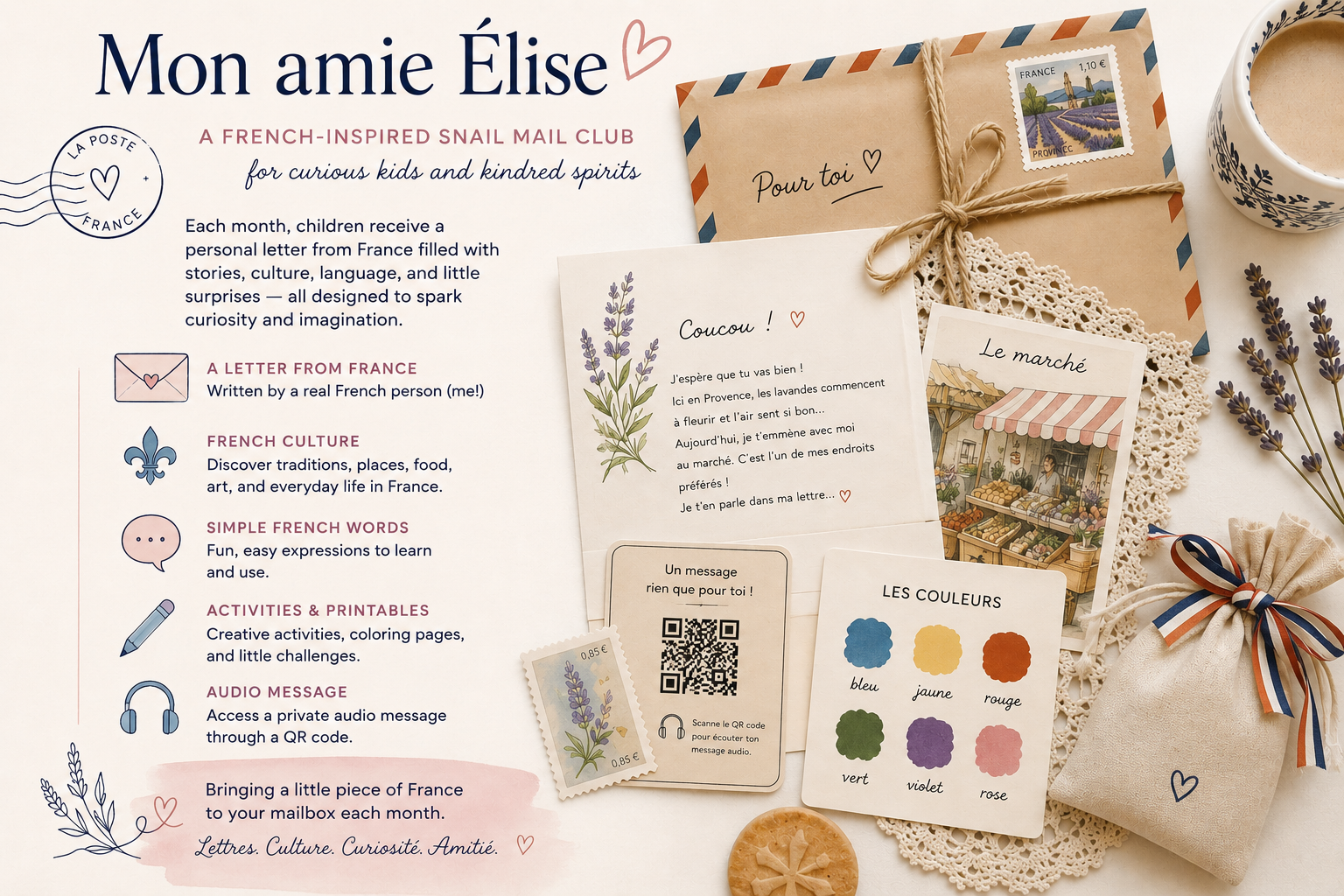
That’s one of the reasons I created Mon amie Élise.
I wanted children to experience French culture in a softer and more meaningful way — through storytelling, illustrations, traditions, simple French words, and the excitement of receiving real mail.
Each letter is written from the perspective of Élise, a little French girl sharing pieces of everyday life in France:
bakery visits
summer traditions
French foods
childhood memories
seasonal rituals
simple language woven naturally into the stories
The goal is not to create pressure around learning French.
It’s to create emotional connection first.
Because when children feel emotionally connected to a culture, language learning becomes much more natural.
For many families, checking the mailbox slowly becomes part of the ritual itself.
You can learn more about Mon amie Élise if you’d like to bring a little piece of French culture into your child’s everyday life.
FAQ About Introducing French to Kids
Can I expose my child to French if I don’t speak it?
Absolutely. Music, books, audio stories, routines, games, and cultural activities can all help children become familiar with French naturally.
What are easy ways to teach French at home?
Some simple ideas include:
listening to French songs
labeling objects in the house
playing memory games in French
creating French-themed afternoons
baking French recipes
reading French-inspired stories
receiving French-themed letters
At what age should children start learning French?
Children can benefit from language exposure from a very young age. Even toddlers absorb sounds, rhythms, and vocabulary through songs, stories, and routines.
Do kids need formal French lessons to learn?
Not necessarily. In early childhood, positive exposure and emotional connection are often more important than formal instruction.
Why do kids love receiving letters?
Receiving mail feels personal and exciting. Letters create anticipation, emotional connection, and curiosity in a way that digital content often cannot replicate.