
Easy & Engaging Ideas for March Lessons
March is the perfect time to celebrate La Francophonie in your French classroom. Whether you’re planning for Francophonie Week or looking for meaningful French activities that go beyond France, this is your moment.
La Francophonie isn’t just about maps and flags (although we love those too 😉). It’s about helping students understand that French is a global language spoken across Europe, Africa, the Caribbean, North America, Asia, and the Pacific.
If you’re looking for ready-to-use, engaging La Francophonie activities for French class, here are powerful ideas that work for middle school, upper elementary, Core French, and French Immersion.
1. Start with a Map: French-Speaking Countries & Territories Labeling Activity
One of the most effective ways to introduce La Francophonie is visually.
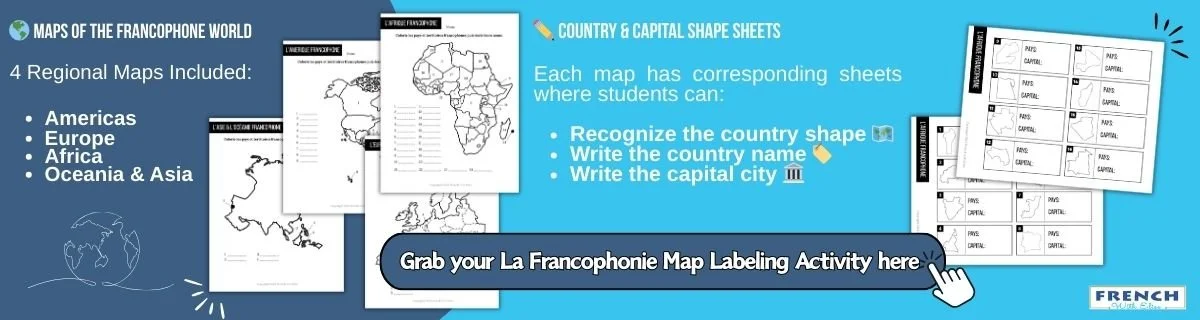
The French-Speaking Countries and Territories Map Labeling – La Francophonie Culture activity gives students a hands-on way to explore the French-speaking world.
What makes this activity powerful?
42 French-speaking countries and territories to label
Individual country shapes for students to write:
The country name
Its capital
Answer keys included
A highly interactive approach to geography
Countries included range from France, Belgique, Suisse, Monaco, and Luxembourg to Sénégal, Côte d’Ivoire, Maroc, Algérie, Canada, Haïti, Liban, Vietnam, Polynésie Française, Martinique, Vanuatu, and many more.
Instead of just memorizing names, students physically engage with the shapes of each country. They connect spelling, capitals, and geography — which builds both cultural awareness and geographic literacy.
If you want a strong foundation for your Francophonie unit, this is it.
Start with a Map: French-Speaking Countries & Territories Labeling Activity
2. Explore Culture Through Food: Francophone Countries Daily Slides
Food is one of the most accessible entry points into culture. And let’s be honest — students instantly connect with it.
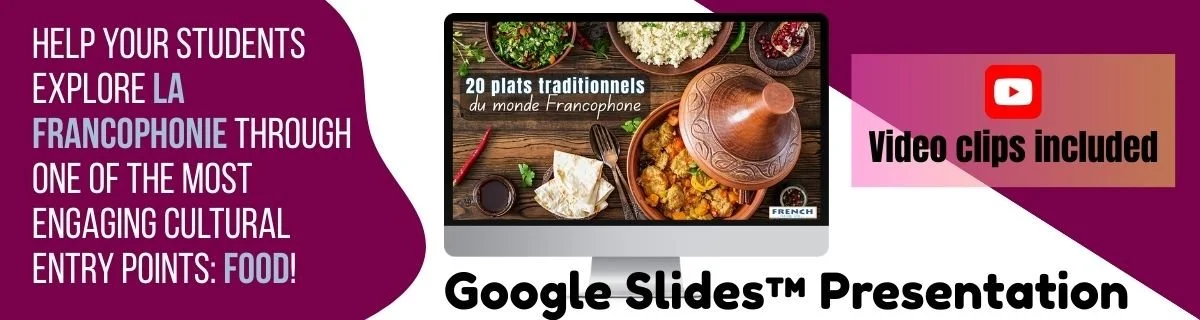
The La Francophonie Activity: Francophone Countries Food | Daily Slides introduces 20 traditional dishes from francophone countries around the world.
Each Google Slide includes:
A short, student-friendly description in French
The country or region of origin
A video clip (1–15 minutes)
A “question du jour” for discussion
This resource works beautifully as:
1 slide per day during Francophonie Month
Bell ringers
Listening activities
Cultural comparison discussions
Early finisher or sub plans
Students explore dishes from Europe, Africa, the Caribbean, North America, and beyond — making La Francophonie activities both visual and meaningful.
Teacher tip: Always preview videos to ensure they align with your school context.
Explore Culture Through Food: Francophone Countries Daily Slides
3. Bring in Music: African Francophone Artists Daily Slides
If you want students to feel La Francophonie, bring in music.
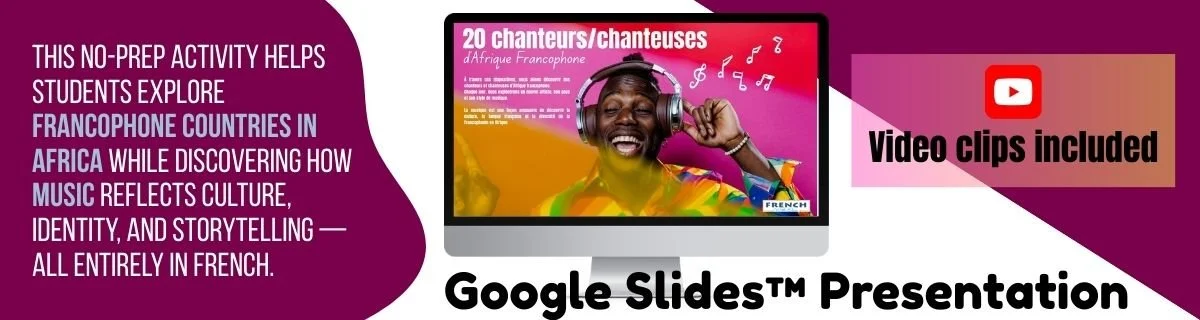
The La Francophonie Through Music – African Francophone Artists French Daily Slides highlights 20 Francophone African singers and shows students how music reflects identity, storytelling, and culture.
Each slide includes:
A featured artist
A video clip of a song
A short paragraph in accessible French
A question du jour for discussion
Why teachers love it:
✔ No prep
✔ Age-appropriate French
✔ Strong cultural depth
✔ Builds awareness of francophone countries beyond France
Music creates instant engagement. Students begin to see that French exists in vibrant, diverse communities across Africa — not just in Europe.
As always, preview video content to match your classroom expectations.
Bring in Music: African Francophone Artists Daily Slides
4. Build Speaking Confidence: La Francophonie Chat Mat
Speaking about culture can feel intimidating for novice learners. That’s where structure makes all the difference.
The French Chat Mat – La Francophonie provides:
Essential vocabulary
Sentence starters
Key discussion phrases
Cultural prompts
It’s perfect for:
Pair work
Structured conversations
Cultural debates
Exit tickets
Oral assessment preparation
When students have language support at their fingertips, hesitation drops and fluency increases. It transforms passive learners into confident speakers.
5. Go Deeper with Country Spotlights: Martinique Culture Slides
Want to move beyond surface-level facts? Dive into daily life.
The La Francophonie | French Daily Morning Slides | Martinique Culture Activity explores life in Martinique through 20 question-based slides — entirely in French.
Students discover:
School life
Uniform policies
Languages spoken (French & Créole)
Dinner times
Teen hobbies
Climate
Music in the French Caribbean
Plus, each lesson includes a “Compare avec ta vie” reflection activity.
This is ideal for:
Francophonie Week
Daily warm-ups
Cultural comparison
Introducing the French Caribbean
Students begin to understand culture through lived experience, not just facts.
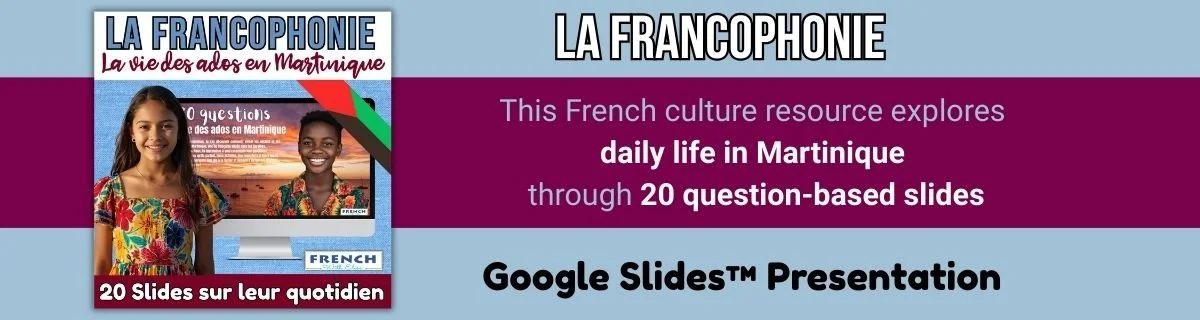
Go Deeper with Country Spotlights: Martinique Culture Slides
6. Take a Virtual Trip: DOM-TOM Field Trips Bundle
If you want to create immersive La Francophonie activities, virtual field trips are unforgettable.
The French Virtual Field Trip DOM-TOM – Excursions Virtuelles Francophonie bundle includes multiple virtual experiences to French overseas territories.
Each field trip includes:
20–35 slides
Teacher directions
Anticipatory questions
Cultural facts
Videos
Closing activity suggestions
Perfect for:
Francophonie units
Distance learning
Projector-based lessons
French Immersion
Advanced Core French
Students explore les territoires d’outre-mer in a structured, engaging way — all in French.
7. Highlight North Africa: Algeria Culture Slides
Another powerful addition to your Francophonie lessons is the La Francophonie | French Daily Morning Slides | Algeria Culture Activity.
Through 20 content-rich slides in comprehensible French, students explore:
School schedules
Languages spoken
Dinner times
Food
Teen life
Music
Climate
And again, they compare daily life in Algeria with their own experiences.
These kinds of French culture activities help students see the diversity within the Francophone world — and challenge stereotypes along the way.
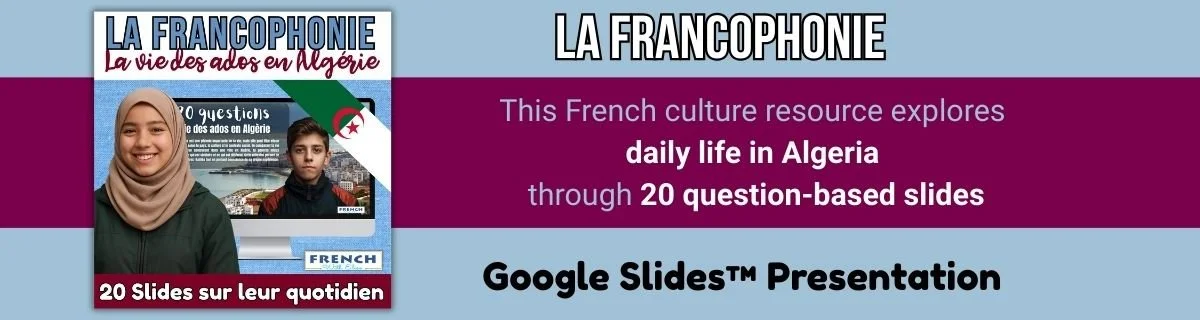
Highlight North Africa: Algeria Culture Slides
8. Collaborative Posters: Francophonie Research Project
If you love project-based learning, the Francophonie Collaborative Posters Bundle | French Speaking Countries Project is a classroom favorite.
Students research countries such as:
La Martinique
Le Maroc
La Polynésie Française
Le Sénégal
Le Burkina Faso
Le Canada
Madagascar
Included:
Research templates
Graphic organizers
English & French versions
Reflection questions
Teaching tips
Collaborative posters are perfect for mixed-level classes. Stronger students can write extended paragraphs, while beginners contribute vocabulary, visuals, or key facts. The final display becomes a beautiful celebration of La Francophonie in your classroom.
9. Review with Flags Coloring Sheets
Need something lower-prep or sub-friendly?
The Flags of French-Speaking Countries/Territories Coloring Sheets – La Francophonie includes 5 pages featuring 42 flags from across the French-speaking world.
This activity works well for:
Review days
Early finishers
Emergency sub plans
Classroom decorations
Students reinforce country recognition while engaging in a calm, focused activity.
10. Add a Craft: Francophonie Windsock Flags
For a more hands-on option, the Flags of French-Speaking Countries/Territories Windsock Francophonie Craft turns flag review into a colorful classroom display.
Students:
Color
Cut
Glue
Assemble windsock flags
These make a vibrant border around your classroom during Francophonie Month — and they’re especially great for French Immersion or Core French students.
Why La Francophonie Activities Matter
When students study La Francophonie, they learn that:
French is spoken on multiple continents
Culture looks different in every region
Language connects diverse communities
Identity and history shape how French is used globally
March is the perfect time to integrate meaningful, engaging French activities that build global awareness.
If you structure your unit with:
A map foundation
Cultural daily slides (food, music, daily life)
Speaking supports
Research projects
Creative review activities
You’ll create a Francophonie unit that students actually remember.
And honestly? That’s the goal. 💛
If you’re planning your March lessons now, start building your La Francophonie activities with intention — and let your students discover just how big the French-speaking world really is.
👉 Click here to download 30 FREE activities to help your students speak more French!