
February is a meaningful time to reflect on history, identity, and representation. While France does not officially celebrate Black History Month, many French teachers choose this moment to highlight the important contributions of Black figures in French history and to broaden students’ understanding of what French culture truly looks like.
French class is a powerful space to explore diversity within France itself — and Black History Month offers a natural opportunity to do just that.
Why Teach Black History Month in French Class?
Black History Month in French class isn’t about importing an American celebration into a different context. It’s about recognizing that Black French voices have played a vital role in shaping France’s history, culture, politics, and arts.
Too often, students are exposed to a narrow version of French history. By highlighting Black French figures, we:
Offer a more accurate representation of France
Encourage meaningful conversations about identity and diversity
Help students see French culture as dynamic and inclusive
This approach supports cultural understanding while staying firmly rooted in the French curriculum.
Influential Black Figures in French History to Highlight
There are many remarkable Black figures whose contributions deserve space in our classrooms. Here are just a few examples that work especially well for middle and high school French students:
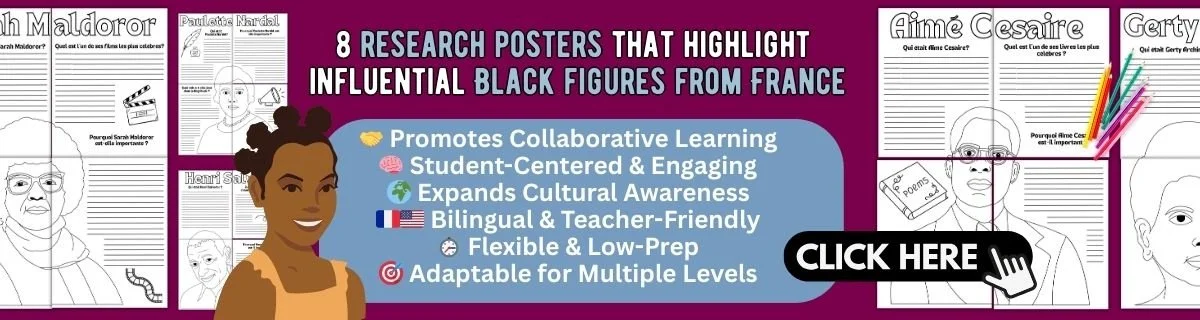
Aimé Césaire – Poet, politician, and founder of the Négritude movement
Sarah Maldoror – Filmmaker and activist who used cinema to explore identity and colonial history
Henri Salvador – Influential musician and entertainer in French popular culture
Paulette Nardal – Intellectual and writer who helped shape Black consciousness movements
Gerty Archimede – Lawyer and politician who fought for social justice
Exploring these figures allows students to connect language learning with history, art, and civic awareness.
French Black History Month Research Poster Activities
One of the most effective ways to engage students during Black History Month is through research-based, visual learning activities.
Research posters work particularly well because they:
Encourage student autonomy
Support reading, writing, and speaking skills
Allow students to process information visually
Spark discussion and peer learning
Students can work individually or in small groups to research a Black French figure, summarize key contributions, and present their findings visually. These posters can then be displayed around the classroom for a gallery walk, giving students the opportunity to learn from one another.
Making Research Accessible with Bilingual Resources
When working with historical and cultural topics, language barriers can sometimes limit student understanding. Using bilingual (French and English) materials helps ensure that all students can fully engage with the content.
Bilingual research posters:
Support comprehension without oversimplifying the topic
Allow students to focus on meaning, not just decoding
Encourage deeper classroom discussions
This is especially helpful for mixed-level classes or students who need additional support.
How to Use Research Posters in Your French Classroom
Here are a few easy ways to integrate French Black History Month research posters into your lessons:
Gallery Walk: Students circulate, read posters, and discuss key takeaways
Mini-Presentations: Students present their figure to the class in French or English
Reflection Writing: Students respond to prompts about what they learned
Cross-Curricular Connections: Tie in history, social studies, or art
These activities work well over several class periods or as part of a short February unit.
French Black History Month Activities Featuring Influential Black Figures in France
A Meaningful Way to Honor Black History Month in French Class
Celebrating Black History Month in French class is about more than a single lesson — it’s about expanding students’ understanding of France and the people who shaped it.
By highlighting influential Black figures from French history through thoughtful research activities, we give students the tools to see French culture more clearly, more honestly, and more inclusively.
Small, intentional choices like these can make a lasting impact.
👉 Click here to download 30 FREE activities to help your students speak more French!