

January always feels like the longest month of the school year—cold mornings, dark afternoons, and students (and teachers!) struggling to get back into routine after winter break. If you’re teaching Core French or French Immersion, you know that January can test your energy, creativity, and prep time more than almost any other month.
That’s exactly why simple, effective French classroom time-savers are essential. With the right systems, routines, and low-prep resources, you can keep learning meaningful without spending your evenings buried in planning.
Today’s post shares practical, teacher-tested strategies to help you teach smarter, not harder—so you can save time, reduce stress, and still deliver engaging French lessons all January long.
⭐ 1. Start January with Predictable French Routines
Consistency = time saved.
Routines eliminate decision fatigue for you and your students.
Here are routines that work beautifully in French class:
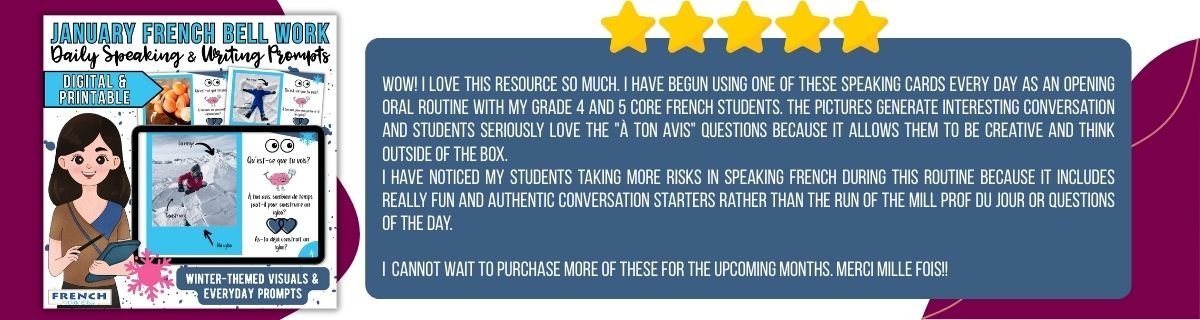
✔ French Bell-Ringers
Use the same structure every day:
“Question du jour”
A seasonal vocabulary prompt
A weather sentence starter
Once students know what to expect, your workload shrinks dramatically.
✔ Weekly Retell Routine
Pick one short video, reading, or photo each week. Students retell what they understood in French using sentence starters. A 10-minute activity = huge gains in comprehension and oral communication.
✔ Exit Ticket Rotation
Instead of creating new ones weekly, rotate:
“J’ai appris…”
“Je veux pratiquer…”
“Ma phrase du jour…”
“Un nouveau mot…”
Routines keep things predictable—and save hours of prep.
⭐ 2. Use No-Prep French January Activities
If January had a motto, it would be: “If it isn’t no-prep, it’s not happening.”
Here’s where no-prep activities shine:
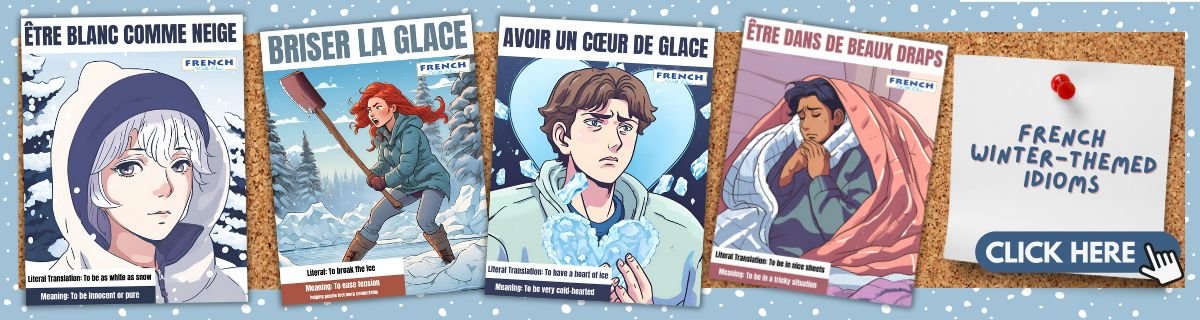
✔ Winter Vocabulary Mini-Lessons
A short list of winter words + images can be reused for:
Kahoot
Matching activities
Labeling worksheets
Oral discussions
Fast-finisher bins
✔ French Cultural Worksheets
January = cultural GOLD:
Le Nouvel An (goals, resolutions)
La Chandeleur (crêpes, traditions)
Each one fills a lesson without scrambling for materials.
✔ Plug-and-Play French Reading Passages
Print-and-go readings with winter themes save you time while building vocabulary naturally.
⭐ 3. Use Templates Instead of Reinventing Activities
One secret of time-saving teachers?
They reuse formats.
Create (or use pre-made) templates for:
Writing tasks
Speaking prompts
Vocabulary pages
Graphic organizers
Culture research sheets
You simply plug in the new topic—January, winter, Epiphany, Chandeleur—and the prep is already done.
⭐ 4. Lean Into Meaningful Cultural Lessons
Cultural mini-lessons are naturally engaging and require very little teacher prep… when you choose the right resources.
January has several ready-made cultural teaching moments:
✔ Le Nouvel An – French Goals & Resolutions
A perfect time for:
Goal-setting prompts
✔ L’Épiphanie – Galette des Rois Traditions
Students love:
Crowns
Fèves
The king/queen tradition
Cultural videos
So simple to teach—and high engagement every time.
✔ La Chandeleur – Crêpe Day
This celebration can fill 1–2 lessons effortlessly with:
Vocabulary
Videos
Culture notes
Reading activities
Discussions
One cultural topic = a week of meaningful, low-prep French lessons.
⭐ 5. Delegate Some Learning to Students
The more students do, the less you prep.
Try these student-led time-savers:
Peer interviews using winter vocabulary
Mini presentations on French winter holidays
Partner dictations
Gallery walks with winter phrases
Independent vocabulary notebooks
Build independence now, and it pays off all year.
⭐ 6. Use Fast-Finisher Bins (a MUST in January)
When students need re-entry time after break, fast-finisher options prevent chaos and save your sanity.
Fill bins with:
Word searches
Coloring + vocabulary pages
Simple speaking prompts
Winter task cards
Students stay busy → you get time back.
⭐ 7. Keep It Simple: January is for Survival, Not Perfection
If your lessons:
review previous skills,
build core vocabulary,
teach culture meaningfully,
and help students reconnect…
Then they’re doing exactly what January lessons should do.
You don’t need big projects or elaborate planning.
You just need consistency, simple routines, and no-prep activities that keep French learning moving forward.
🌟 Final Thoughts
January doesn’t have to drain you—not when you teach strategically. With predictable routines, engaging cultural lessons, and simple no-prep activities, you can save hours of planning time while keeping French class fun, structured, and meaningful.
Teaching smarter (not harder) is the real January glow-up. ✨
👉 Click here to download 30 FREE activities to help your students speak more French!